What is Chiropractic?
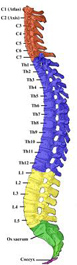
Chiropractors work with the bones of the spinal column (vertebrae) and the nerves of the spinal cord. Your spine has two main functions: (1) to provide support & allow movement; and (2) to house & protect your spinal cord. Your nervous system (spinal cord & exiting nerves) controls the function of every cell/tissue/organ in your body. Messages are transmitted from your brain, down your spinal cord, across exiting nerves to a particular body part; and then back up to your brain again.
It is these messages that supply the vital information on how that particular body part should function, therefore if they are impeded in any way - that particular body part (cell/tissue/organ) cannot and will not function at 100% of its capability.
What is a Vertebral Subluxation?
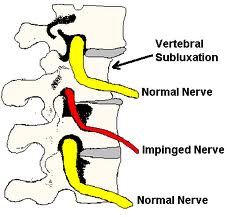
Every now and then, your vertebrae may displace or misalign. Sometimes this is the result of a sports injury, car accident, fall or spill, pregnancy, or poor posture. Other triggers include emotional stress and chemical imbalances. Some of these vertebrae may misalign to an extent where they actually impinge, or put pressure on, an exiting nerve root from your spinal cord. This impingement will interfere with the information flow across that particular nerve (this is called a "Vertebral Subluxation").
What is a Chiropractic Adjustment? 
Chiropractors are the only health-care providers trained to locate vertebral subluxations, and by means of applying a precise, gentle force in a specific direction ('a chiropractic adjustment'), they can help restore your vertebrae back to their 'normal' functioning position, remove the subluxation, allowing your body to again function at its most optimal level. Although most chiropractic adjustments are applied to the spinal region, this does not mean that Chiropractors only help with neck and back complaints.
The Purpose of Chiropractic?

The purpose of Chiropractic is to optimize the overall health and wellbeing of a patient. Because our nervous system controls the functioning of all our body parts, a faulty nerve supply can result in a vast range of health conditions. Neck pain, back pain and headaches are just symptoms of usually a much deeper health problem. Some people are totally unaware that they have a subluxation. This is because many spinal nerves do not possess the fibres that transmit pain messages. Other health conditions commonly helped by Chiropractors include: colic, reflux, bedwetting, sciatica, digestive problems, skin disorders, cramp, depression, allergies, asthma, colds & flu, sleeping disorders and fatigue.
Benefits of Chiropractic?
Many patients under Chiropractic Care report a vast number of benefits. The most common include:
- Relief of spinal & joint pain
- Relief of headaches & migraines
- Increased range of motion
- Decreased stiffness & muscular discomfort
- Improved coordination & concentration
- Increased energy levels
- Better sleeping patterns
- Improved Posture
- Increased immunity
How does Chiropractic differ from Western Medicine? 
When assessing the health and wellbeing of a patient, Chiropractors tend to evaluate the entire person as a whole, rather than just focusing on a specific body region or symptom.
Chiropractic is based on the principle that the body (if functioning optimally) is able to heal itself, therefore by detecting and correcting spinal and nerve interferences (subluxations), symptoms are often alleviated and the body's innate or inborn healing capabilities are activated. This is often a different approach to that of western medicine, whereby many medical doctors treat the symptoms of a condition, rather than focus primarily on the actual cause.
As the famous Thomas Edison once said – "The doctor of the future will give no medicine but will interest his patients in the care of the human frame, in diet and in the cause and prevention of disease."
Who can see a Chiropractor?
Chiropractic care has helped millions of people worldwide for over 115 years, from newborn babies to pregnant mothers, from professional athletes to the elderly. Techniques may differ depending on the patient's age, mobility, previous surgical procedures or injuries and other health conditions, but they will all help correct spinal problems and subluxations.
How long will I need to see a Chiropractor for?
This is entirely up to you and how you value your spinal health and wellbeing. Once obvious signs & symptoms have resolved, patients are usually given the option of receiving periodic spinal check-ups to help reduce future recurrences or the development of new problems.
Some people choose to end care at this point, others continue to receive further care to help improve their posture and strengthen their spine, and others choose an ongoing preventative/maintenance approach.
Periodic spinal check-ups are no different to what dentists recommend to their patients in order to prevent tooth decay and gum disease.